
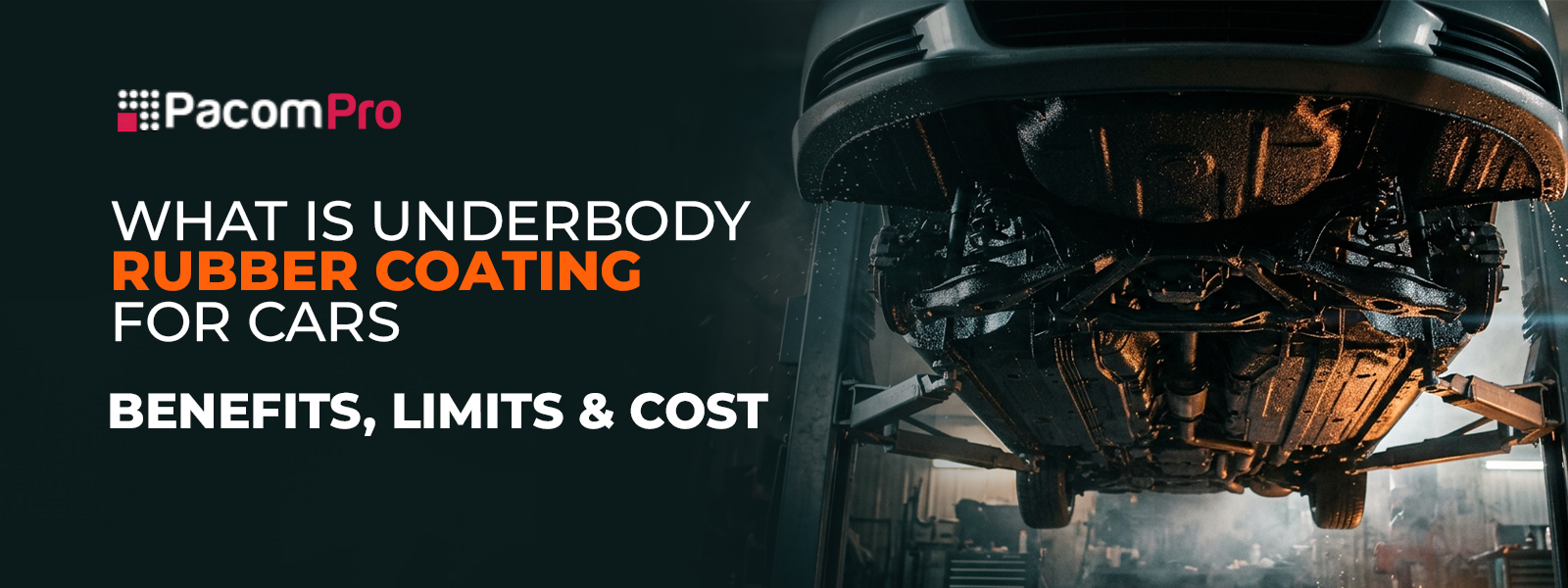
A car’s underbody is constantly exposed to water, mud and road debris.
Over time these conditions can damage exposed metal or existing protective layers. They can increase the risk of rust.
Underbody rubber coating adds a layer to suitable underbody surfaces.
Is underbody rubber coating necessary, for every car, how long does it last and what does it cost in India?
Here is what you should know before choosing rubber coating treatment.
What Is Underbody Rubber Coating for Cars?
Underbody rubber coating is a material that is applied to chosen parts below a car, such as underbody panels and wheel arches.
Once it cures it becomes a rubber-like layer that helps guard treated surfaces against:
- Stone chips and road debris
- Moisture and environmental exposure
- Abrasion and everyday wear
- Corrosion caused by exposure to damaging elements
Unlike ceramic coating, which adds shine and water resistance, the outside underbody coating is made for parts that see road conditions.
It adds to the car’s factory protection. It does not replace factory corrosion protection, fix existing rust or automatically cover every cavity.
How Does Rubber Coating Protect a Car’s Underbody?
During driving, small stones, mud and water can hit the underside of a car. A good rubberised coating adds a layer that helps with:
- Reducing damage from stone chips and scratches on the treated areas.
- Stopping contact, with moisture and road grime.
- Lowering the chance of rust forming if applied properly.
- Adding some sound insulation depending on the coating used.
The results depend on the product quality, how well the surface is prepared, how much area is covered and the original condition of the underbody.
It won’t stop every impact. It can’t promise that rust will never happen.
It cannot prevent every impact or guarantee that rust will never develop.
What Are the Benefits and Limitations?
The main benefit of rubber coating is that it adds extra protection to parts of the car that are exposed to road debris and water. This treatment can be helpful for vehicles that are often driven on unpaved roads, muddy routes, roads with a lot of debris or in areas that get heavy monsoon rainfall.
There are important limits to keep in mind. Underbody rubber coating cannot fix existing rust or corrosion. It also cannot stop all types of damage from happening. Areas that are not treated stay unprotected.. If you apply the coating, over dirt, moisture or untreated rust it might trap those contaminants and make corrosion worse.
A professional inspection can help decide if your car really needs this kind of treatment.
How Long Does Automotive Rubber Coating Last?
The lifespan of the coating depends on the product, application quality, road conditions and how well it is maintained.
- Some aftermarket coatings might need inspection or touch-ups within a years.
- Certain products can last longer if used under the conditions.
- Frequent exposure to water, rough roads and abrasive debris can speed up wear and tear.
- Check the manufacturer’s warranty and the recommended inspection intervals.
Inspect the underbody regularly for peeling, cracks, damaged areas or signs of corrosion.
Is Rubber Coating Worth It for Cars in India?
Underbody rubber coating can be useful for vehicles that often drive on roads, rough terrain or, in heavy rain.
It can also help cars that have worn or broken protective layers or exposed spots that need fixing.
Not every car needs extra coating.
- New cars normally have corrosion protection applied by the factory.
- The amount of protection there changes from one vehicle to another.
- Driving conditions and the condition of the underbody decide if extra treatment is needed.
Ask a technician to check the underbody before you spend money on extra protection.
What Is the Cost of Underbody Rubber Coating in India?
The cost depends on:
- Vehicle size and type
- Product and coating quality
- Area covered
- Surface preparation requirements
- Rust treatment if needed
An estimate for standard rubberised underbody treatments is between ₹3,000 and ₹8,000. If you choose premium products or an extensive treatment the cost will be higher.
These figures are not fixed market rates. Are not a Pacom Pro quotation.
Before choosing a package check whether it includes:
- Underbody cleaning and inspection
- Surface preparation and appropriate rust treatment
- Masking of components that must remain uncoated
- Coating application and curing
- Warranty details and coverage limitations
- To get a price, request an assessment that takes your vehicle’s condition into account.
How Is Underbody Rubber Coating Applied and Maintained?
Proper application starts by checking the underbody for rust, damage and any existing protective layers.
The process usually involves:
- Cleaning the underbody
- Drying the surface. Looking at any existing rust.
- Getting the surface ready based on the product guidelines.
- Covering parts that should not get any coating.
- Putting on the product as the manufacturer says.
- Letting it sit enough to cure before putting the vehicle back into use.
After putting on the coating follow the recommended steps for curing and keeping it in shape.
To keep the coating in condition:
- Take off the dirt and grime that builds up.
- Don’t use high-pressure water near the coating.
- Set up checks of the underbody.
- Fix any peeling, damage or rust soon, as possible.
Never put coating on brakes, exhaust parts, moving parts or any area where the product is not allowed.
Final Verdict: Should You Get Underbody Rubber Coating?
Underbody rubber coating can give protection against abrasion, stone chips and environmental exposure on treated surfaces that are suitable. Underbody rubber coating is useful when the underbody is vulnerable.
However the right choice depends on the car’s existing factory protection, the underbody condition and the driving conditions. Underbody rubber coating should be chosen only if the car needs it.
A professional inspection is the starting point. A professional inspection helps identify whether extra underbody rubber coating is necessary by assuming that every car needs the same treatment.
At Pacom Pro, in Coimbatore discuss the car’s underbody condition and available underbody rubber coating options before deciding.
Frequently Asked Questions
1. Does underbody rubber coating prevent rust?
It can help reduce rust by protecting the underbody from moisture and harmful elements. Only if the surface is properly cleaned and prepared. It does not stop rust completely. Repair existing rust damage.
2. Can rubber coating protect a car from scratches and stone chips?
It offers some protection against scratches and stone chips on the underbody especially on areas that face road debris.. It does not protect the painted body panels or the exterior surfaces of the car.
3. How long does underbody rubber coating last?
The duration varies depending on the quality of the coating, how well it was applied, the weather and the driving conditions. Some coatings last years especially with regular checks. Always follow the manufacturer’s recommended inspection and maintenance schedule.
4. Is underbody coating necessary for a car?
Not always. Most new cars come with a level of rust protection from the factory. However if you drive on roads or in areas with high humidity an inspection can help decide if extra protection is needed.
5. How much does underbody rubber coating cost in India?
The price can range from around ₹3,000 to ₹8,000 for treatments. Advanced or full-coverage coatings may cost more. It’s best to get a quote tailored to your vehicle and check what is included in the service like coverage areas and warranty terms.