
Choosing car sun films is not about picking the darkest shade.
The right automotive sunfilm can help control cabin heat, reduce glare, provide UV protection and make driving comfortable. Different films can perform differently even when they look similar.
This guide covers benefits, types, performance factors and things to think about when installing a car sun film.
Why Do Cars Need Sunfilm?
Sunlight entering the car’s glass can increase cabin temperature and expose the interior to solar radiation.
This can affect:
- Dashboard surfaces
- Plastic components
- Cabin comfort
- seats
- Door trims
- Driving visibility during bright sunlight
A properly selected sunfilm can help reduce these effects.
For car owners considering protection beyond sunfilm, Pacom Pro gives car care and protection services in Coimbatore, including detailing, PPF and coatings.
Benefits of Car Sunfilm
|
Benefit |
What it helps with |
|
Heat rejection |
Helps reduce heat entering the cabin |
|
UV protection |
Helps reduce UV rays |
|
Glare reduction |
Improves comfort during sunlight |
|
Privacy |
Reduces visibility into the cabin |
|
Interior protection |
Helps reduce solar exposure |
|
Driving Comfort |
Makes the cabin comfortable |
The important point is darkness alone does not determine performance.
A lighter shade performance film can provide better heat rejection than a darker film.
What Are Different Types of Car Sunfilm?
Different sunfilms use different technologies.
Common categories are:
1. Dyed Sunfilm
Dyed films use dye in the film making to create the needed shade.
Characteristics are:
- Budget-friendly
- Multiple shades
- Privacy and appearance benefits
- Performance depending on specific product
They can be used when appearance and basic window film requirements are the priority.
2. Metalized Window Film
Metalized films have microscopic metallic particles.
They can provide:
- Heat rejection
- Glare reduction
- Reflective appearance
Some metalized films can interfere with electronic signals such as GPS or other wireless functions.
This is why film’s making should be considered before installation.
3. Carbon Sunfilm
Carbon films use carbon-based particles in the film making.
They are mostly selected for:
- Darker appearance
- Heat management
- Privacy
- A more refined finish
Performance differs between manufacturers and product specifications.
4. Ceramic Sunfilm
Ceramic films use ceramic particles in the film making..
Ceramic films can offer:
- High heat rejection
- UV protection
- Glare reduction
- Optical clarity
- Reduced signal interference compared with some metalized films
Two ceramic films can have different specifications and different real-world performance.
Car Sunfilm Darkness vs Performance
A common mistake in choosing a film simply because it looks dark.
A darker film does not mean better heat rejection.
When comparing car sunfilms, look at:
- VLT
- IR rejection
- TSER
- UV rejection
- Optical clarity
- Film construction
- Warranty
- Installation quality
This is also why picking a sunfilm because of shade can end up wrong.
If you are comparing different films before buying, our guide on what to check when buying car sunfilm helps you in your decision.
What Is VLT?
VLT stands for Visible Light Transmission.
It says how much visible light passes through the film.
In simple terms:
- Higher VLT = lighter-looking film
- Lower VLT = darker-looking film
VLT helps show the appearance and light transmission of the sunfilm.
It should not be treated as a direct measurement of heat rejection as well.
What Is IR Rejection?
Infrared radiation is related to the heat from the sun.
A sunfilm that blocks a lot of infrared can help keep the heat from getting through the glass.
You should not look at infrared blocking, by itself. When you are checking sunfilms make sure to look at the full details of how each film performs.
What Is TSER?
TSER stands for Total Solar Energy Rejection.
It shows overall solar energy rejected by the sunfilm.
For buyers comparing sunfilms, TSER can provide a wider indication of solar-energy performance than just looking at how dark a film appears.
Why Do Two Sunfilms With the Same Shade Perform Differently?
Two films having similar appearance but use different technologies and makings.
Performance can differ because of:
- Film composition
- Number of layers
- IR rejection capability
- Manufacturing quality
- Glass type
- Solar energy rejection
- Optical properties
- Installation quality
This is important when comparing premium and budget films.
How to Choose Car Sunfilm?
The right film depends on the vehicle, driving conditions, comfort and budget.
Step 1: Identify Your Main Requirement
Ask what is your priority in film.
Is your priority:
- Heat reduction?
- UV protection?
- Privacy?
- Glare reduction?
- Appearance?
- A combination of these?
Step 2: Compare Performance Specifications
Do not compare films by shades alone.
Check:
- VLT
- IR rejection
- TSER
- UV rejection
- Optical clarity
- Warranty
- Film technology
Step 3: Consider How You Use Your Car
Requirements can change depending on driving habits.
For daily city driving:
- Heat management
- Glare reduction
- UV protection
- Comfortable visibility
For long-distance driving:
- Heat rejection
- Glare reduction
- Optical clarity
- Driving comfort
For cars parked outdoors:
- Heat protection
- UV protection
- Interior protection
For luxury vehicles:
- Optical clarity
- Premium appearance
- High-performance protection
Step 4: Consider the Vehicle’s Glass Area
SUVs often have larger glass areas.
The film should be selected according to the vehicle’s glass area and usage.
Why Professional Sunfilm Installation Matters
Even a high-quality sunfilm can look poor when installed incorrectly.
Professional installation helps in:
- Cleaner edges
- Better alignment
- Fewer visible bubbles
- Better optical clarity
- Consistent appearance
- Proper film adhesion
Dust contamination, poor glass preparation and incorrect application techniques can affect the result.
What Happens During Sunfilm Installation?
A professional installation involves:
- Glass inspection
- Proper glass cleaning
- Precise film application
- Squeegee application
- Edge finishing
- Final inspection
The objective is to achieve a clean and properly finished installation.
Pacom’s Car Care Sunfilm Studio in Coimbatore
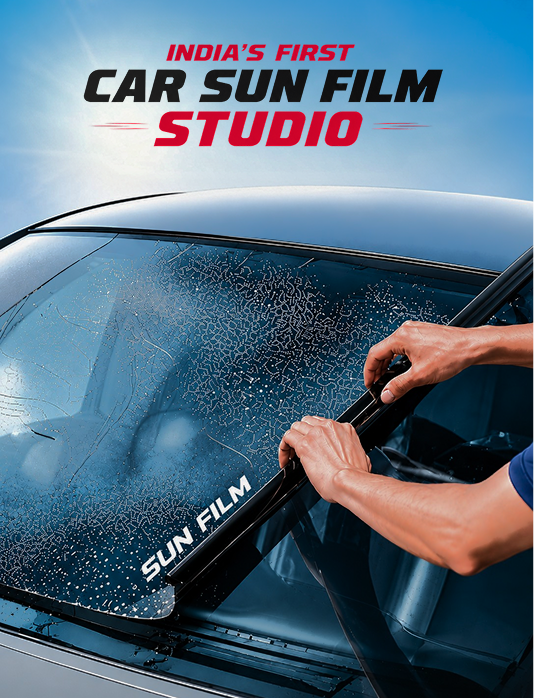
Pacom’s Car Care is India’s first dedicated Sunfilm Studio, offering a wide variety of automotive sunfilms.
The studio brings multiple film choices all in one place, where customers can compare different films based on their needs.
Customers can explore different:
- Technologies
- Shades
- Performance levels
- Heat-rejection options
- Privacy levels
- Price points
The motive is to help customers select films based on their actual needs.
For car owners searching for sunfilms in Coimbatore having multiple options available at one studio makes the buying process easier.
Car Sunfilm vs Car Window Film: Is There a Difference?
In automotive “sunfilm”, “car window film” and “automotive window film” are often used to describe the same product.
The differences are in:
- Technology
- Construction
- Performance
- Specification
- Quality
- Installation
Therefore, focus on actual film rather than the terminology used.
Common Mistakes When Buying Car Sunfilm
Common mistakes to avoid :
- Choosing only by darkness
- Comparing only by price
- Assuming all ceramic film performs the same
- Ignoring VLT
- Looking at IR rejection alone
- Ignoring TSER
- Ignoring UV protection
- Choosing without checking warranty
- Selecting without considering visibility
- Focusing on film quality but ignoring installation quality
- Assuming higher price means better performance
What to Check Before Installation?
Before the installation, ask:
- What film technology is being used?
- What is its VLT?
- What are its heat-rejection specifications?
- What is its UV rejection?
- What warranty is provided?
- What shade options are available?
- Is the film suitable for my vehicle?
- How will the film be installed?
Final Thoughts
Choosing car sunfilms should not be something decided by how dark the car sunfilm’s by how much it costs.
A better way is to look at factors when comparing different films:
- Film technology
- Visible Light Transmission (VLT)
- Heat-rejection performance
- UV protection
- Total Solar Energy Rejection (TSER)
- Optical clarity
- Warranty
- Installation quality
The right car sunfilm should fit the vehicle, match driving conditions and suit comfort needs and budget.
Pacom’s Car Care offers a range of sunfilm options at its Sunfilm Studio, in Coimbatore. This helps customers choose wisely based on what they need.
The best sunfilm is not always the darkest or the most expensive.
It’s the one that gives the balance of performance, comfort, visibility and value for your car.
Frequently Asked Questions
- Does darker sunfilm reject heat?
Not necessarily. Darkness and heat rejection are characteristics. A darker film is not automatically a performing film.
- What is the best car sunfilm?
There is no film that is best for every vehicle. The right choice depends on VLT, heat rejection, UV protection, optical clarity, privacy, budget and vehicle usage.
- What is VLT in car sunfilm?
VLT means Light Transmission. It indicates how much visible light passes through the film. Higher VLT generally means a looking film.
- Does car sunfilm protect the interior?
A suitable film can help reduce UV exposure and solar energy entering through the glass, which can help reduce prolonged sunlight exposure to surfaces.
- Where can I choose car sunfilms in Coimbatore?
Pacoms Car Care Sunfilm Studio, in Coimbatore offers a wide range of automotive window film options allowing customers to compare different technologies, shades, performance levels and price points.