
Loading...

What Should You Actually Check When Buying Car Sunfilm

car sunfilm

Buying a car sunfilm is simple.

Figuring out if you are really using your money in the way possible is the tough part.

You will come across. Hear terms like IR rejection, UV protection, ceramic technology, premium films and high heat rejection.. What do these mean for your car?

The darker the film the more costly it usually is. Usually the price does not have any connection to the real quality of the film.

Begin with what you need and learn about the specifications to compare the full package and make a smart choice.

Start With Your Car, Not the Film

Before asking which is the best car sunfilm, ask questions:

“What do I want the film to do?”

Requirements may differ depending on how you use your car.

For example:

  • Car parked outdoors → heat and UV protection matters more
  • Daily city driving → comfort, glare reduction and privacy matters more
  • Long-distance driving → heat rejection and optical clarity is important
  • Luxury car → appearance, clarity and premium finish are higher priorities

There is no single film that is perfect for all cars.

The right film is the one that matches the requirements.

1. Ask for the Exact Film Specification

Don’t stop at:

“Is this a premium film?”

Ask:

“What exactly is the specification of this film?”

Before buying, ask for:

  • VLT
  • IR rejection
  • TSER
  • UV rejection
  • Film technology
  • Warranty

These specifications give concrete comparison instead of relying on sales claims.

If you want in-depth knowledge on these terms, our complete guide to choosing car sunfilms explains it all.

2. Check the VLT (Visible Light Transmission)- Not Just the Shade

It tells how much visible light passes through the film.

As buyer, important question to ask is:

“What does this VLT do for my driving?”

A dark film can give more privacy, while a lighter film can offer better visibility.

Your choice should consider:

  • Daytime visibility
  • Night-time visibility
  • Privacy
  • Your driving conditions
  • Vehicle appearance

Don’t choose a film only because it looks impressive.

You should be comfortable looking through it from inside.

3. Don’t Judge the Film by IR Rejection Alone

IR rejection is one of the numbers used to market premium sunfilms.

But that alone should not decide your buying.

If someone tells you:

“This is a 95% IR rejection film.”

Ask:

  • How is it measured?
  • What wavelength range is it tested on?
  • Is the figure from the manufacturer?
  • What is the TSER?
  • What is the VLT?
  • What other specifications does the film have?

A high IR rejection can be useful, but it does not describe complete performance of a film.

Look at its complete specifications.

4. Look at TSER Too

TSER means Total Solar Energy Rejection.

Unlike looking at specific components of solar radiation, TSER gives indications of total solar energy rejected by the film.

When comparing films, look at overall specifications rather than choosing the one with the biggest number in one category.

A practical comparison can have:

Specification

What it helps you understand

VLT

Visible light transmission and shade

IR rejection

Infrared rejection performance

TSER

Overall solar-energy rejection

UV rejection

UV protection

Optical clarity

Visibility through the glass

The numbers should be considered together.

5. Ask About UV Protection

UV protection is another factor, especially when your vehicle spends hours under the sun.

UV exposure can damage interior materials over time.

A suitable UV protection sunfilm can help cut UV rays through the glass.

This can be useful in protecting surfaces such as:

  • Leather
  • Dashboard materials
  • Door trims
  • Other interior surfaces

If the car is mostly parked under the sun, don’t ignore these specifications.

6. Know Which Technology You’re Actually Buying

Not every window film is made the same way.

You might see:

  • Dyed films
  • Metalized films
  • Carbon films
  • Ceramic films

The main question should not be:

“Is it ceramic?”

The better question should not be:

“What does this particular film offer?”

Two films using the technology can still have different specifications, construction, clarity and performance.

So look at the product rather than just relying on the technology name.

7. Compare the Complete Price, Not Just the Film Price

This is where many buyers get confused.

You may receive two quotations:

Film A – ₹ X
Film B – ₹ Y

The immediate reaction is often:

“Why is one expensive?”

Instead, ask what changes between the two.

What to compare

Question to ask

Film

Which product is being installed?

Technology

What type of film is it?

Performance

What specifications does it have?

Warranty

How long and what all does it cover?

Installation

How is the installation carried out?

After-sales

What support is given?

Price

What does the complete package cost?

A cheaper price isn’t better value.

A higher price isn’t better either.

You need to understand what you’re paying for.

8. Check the Warranty Before Paying

Ask about the warranty before buying.

Know about:

  • How long is the warranty?
  • What exactly is covered?
  • Is bubbling covered?
  • Is peeling covered?
  • Is discoloration covered?
  • Who handles the warranty?
  • Do you receive warranty documentation?

A clear warranty gives you a better understanding of what the manufacturer or installer stands behind.

9. Look at Installation Quality

The film isn’t the only thing you’re buying.

You’re also buying the installation.

Even a good-quality film can look poor when installed badly.

Before installation, look for:

  • Clean glass preparation
  • Clean installation environment
  • Proper film cutting
  • Accurate alignment
  • Clean edges
  • Proper finishing

After installation, inspect for:

  • Visible bubbles
  • Dust particles
  • Haze
  • Uneven edges
  • Peeling
  • Contamination beneath the film

10. Don’t Automatically Choose the Darkest Film

This deserves its own warning because it is one of the most common buying mistakes.

Darkness does not automatically mean heat rejection.

A film can look dark and still not be the best-performing option for your requirements.

Similarly, a lighter film can offer strong solar-energy rejection depending on its technology and specifications.

If you want to understand why films with a similar appearance can perform differently, see our upcoming guide on why two sunfilms with the same shade can perform differently.

11. Think About Visibility Before Choosing the Shade

Ask yourself:

  • Can I see clearly at night?
  • Can I see properly in the rain?
  • Can I clearly see through the side windows?
  • Does the film create noticeable haze or distortion?

Privacy is useful.

But it should not come at the expense of comfortable and safe visibility.

The right shade balances between appearance, privacy and practical visibility.

12. Don’t Choose Only by Brand Name

A recognised brand can give confidence, but brand name alone shouldn’t make the decision.

Same brand may have multiple film ranges with different specifications.

So ask for the exact product rather than comparing only brand names.

A Simple Checklist Before You Buy

Before buying for your car sunfilm, ask these questions:

About the film

  • What is the exact film?
  • What technology does it use?
  • What is the VLT?
  • What is the IR rejection?
  • What is the TSER?
  • What is the UV rejection?

About the installation

  • Is the glass properly prepared?
  • How is the film cut?
  • How are the edges finished?
  • What quality checks are done after installation?

About the warranty

  • How long is the warranty?
  • What does it cover?
  • Is the warranty provided?

About the price

  • Does the quotation include installation?
  • Is it for the complete vehicle?
  • What changes between different price options?
  • Am I paying more for measurable performance or simply for the brand?

If the seller can answer these questions clearly, you have a better basis for making your decision.

How Pacom’s Car Care Helps You Choose

At Pacom’s Car Care Sunfilm Studio in Coimbatore, customers can explore a wide variety of automotive sunfilm options in one dedicated space.

Pacom’s Car Care is India’s first dedicated Sunfilm Studio, bringing different film options, shades and performance levels together for customers to compare.

The approach is simple:

Understand the requirement.

Compare the options.

Choose what fits the car.

Customers can consider factors such as:

  • Shade
  • Heat-rejection requirements
  • Privacy
  • Vehicle type
  • Driving conditions
  • Budget
  • Film specifications

The objective isn’t to say that one film is the right answer for everyone.

It is to help car owners make a more informed choice.

What Is the Best Car Sunfilm?

There isn’t one universal answer.

The best car sunfilm for you depends on what you expect from it.

If your priority is heat management, look closely at the relevant solar-rejection specifications.

If privacy is important, consider the shade and VLT.

If visibility is a priority, pay attention to optical clarity and the appropriate VLT.

If the car is parked outdoors, UV and solar protection may deserve more attention.

And whatever film you choose, don’t overlook installation quality and warranty.

Final Thoughts

Buying car sunfilm shouldn’t be a choice between the darkest film and the lowest price.

Before buying, understand what you’re getting.

Check the specification.

Compare the performance.

Ask about the warranty.

Look at the installation.

And most importantly, choose according to how you actually use your car.

The right film is not necessarily the most expensive one.

It is the one that gives you the combination of performance, visibility, comfort and value that your car actually needs.

Frequently Asked Questions

What should I check when buying car sunfilm?

I recommend you check sunfilm specifications carefully. Look at sunfilm VLT sunfilm IR rejection, sunfilm TSER, sunfilm UV protection, sunfilm technology, sunfilm optical clarity, sunfilm warranty and sunfilm installation quality. Also consider your driving conditions and budget.

How do I choose car sunfilm?

I start with my requirements instead of just looking at brand or price. I decide what matters most to me then compare sunfilm specifications, sunfilm warranty, sunfilm installation and total sunfilm price.

Is sunfilm better?

Not necessarily. A darker sunfilm gives a level of visible light transmission and privacy but darkness alone does not decide sunfilm heat‑rejection performance.

Is IR rejection enough?

No. IR rejection is one specification. IR rejection should be considered alongside sunfilm TSER, sunfilm VLT, sunfilm UV protection and the overall construction of sunfilm.

Where can I compare car sunfilm options in Coimbatore?

Pacom’s Car Care Sunfilm Studio, in Coimbatore offers a range of automotive window film options allowing customers to compare different shades and performance levels according to their requirements.
Recent Blogs

Paint protection film

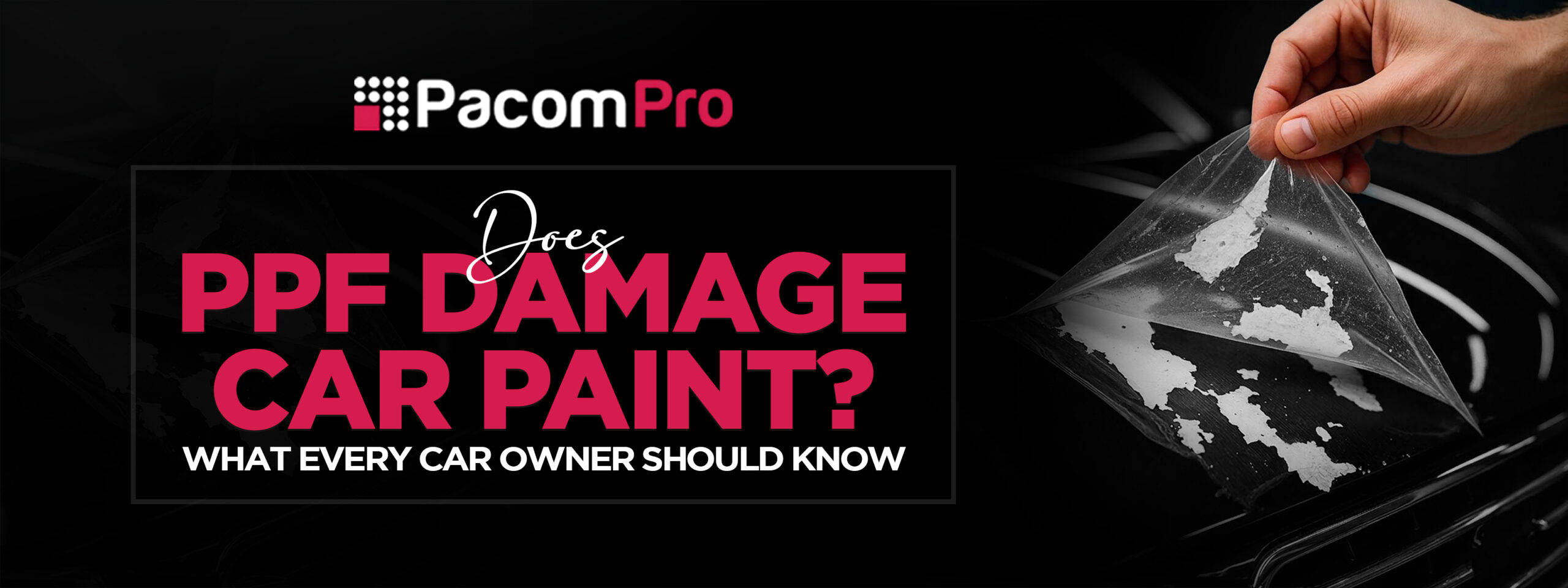
Does PPF Damage Car Paint? What You Should Know

22/10/2026

Paint Protection Film (PPF) is meant to keep your car’s paint safe from daily wear and tear. But many people worry before getting it installed:

“Can PPF actually hurt my car’s paint?”

The short answer is: no not if it’s the kind of PPF properly installed and removed and your paint is in good shape.

It’s not that simple. The condition of your paint, the quality of the film, how it’s put on and how it’s taken off all play a role.

Here’s what real car owners should know before deciding to get PPF.

What Is PPF?

Paint Protection Film is a thin film placed over painted parts of your car.

It acts as a shield between your paint and things that can damage it on the road like:

  • Stone chips
  • Small scratches
  • Road dirt
  • Bug splatters
  • Bird poop
  • Tree sap
  • Light grime

Unlike a coating, which is a liquid that bonds to the paint PPF is a physical layer you can see and feel.

That difference matters when you’re choosing how to protect your car.

Can PPF Damage Factory Paint?

If your car has well-bonded factory paint then professionally installed PPF should protect it not harm it.

The real issue isn’t the film. It’s what’s under it.

If the paint is already weak flaking or was repainted badly then removing the PPF later might pull off paint or expose hidden damage.

That’s why a good inspection is needed before installation.

When Can PPF Become a Problem?

There are situations where you need to be extra careful.

1. Poor-Quality Repainted Panels

Factory paint and repaints aren’t the same.

A repainted panel might have issues with:

  • How well the paint sticks
  • The primer used
  • Clear coat thickness
  • How it was cured
  • Paint prep work
  • Overall finish

If PPF goes over, a repaint removal later could be risky.

That doesn’t mean you can’t put PPF on repainted areas. Just make sure the paint is checked first.

2. Damaged or Peeling Paint

If the paint is already peeling, lifting or chipped, putting PPF over it isn’t the fix.

PPF is not meant for paint.

The surface should be checked before any film is applied.

3. Incorrect Installation

A pro installer makes a difference.

Bad installation can lead to:

  • Poor adhesion
  • Dirt trapped under the film
  • Edges
  • Uneven finish
  • Stretch marks
  • Lifting at the edges

Even a good film can look bad if it’s not put right.

4. Incorrect Removal

Removing PPF needs care.

Pulling hard using wrong tools or not using heat can damage the paint especially if it’s already weak.

Professionals often use heat and gentle techniques to peel the film off

Can PPF Pull Off Car Paint?

This is a concern for customers.

If your car has healthy factory paint and the PPF is installed right it should come off without taking paint with it.

We can’t say it’s 100% safe for every car or every panel.

The surface underneath matters.

For example a factory-painted panel and a repainted one should not be treated the same.

That’s why a professional check before installation is key.

What About New Cars?

New cars are candidates for PPF. Their paint is fresh. You can protect it right from the start.

PPF is especially helpful on parts that hit the road the most, like:

  • Front bumper
  • Bonnet
  • Front fenders
  • ORVMs
  • Door edges
  • A-pillars
  • Rocker panels

How much you cover depends on how you drive and where your car is exposed.

Does PPF Damage the Clear Coat?

When installed and removed correctly from a surface PPF is meant to protect both the paint and the clear coat.

Still the same rules apply:

  • Check the surface first
  • Pick a film
  • Follow proper installation steps
  • Let it bond well
  • Remove it right

If the clear coat is already cracking or peeling the film might not be safe to remove.

Can PPF Cause Paint Discolouration?

PPF doesn’t change the car’s colour when installed.

If part of the car is covered for a long time and the rest is exposed to sun and weather the uncovered areas may age differently.

When you take off the film you might notice a difference in how the paint looks.

That’s why vehicle age and condition matter when choosing coverage.

Does PPF Leave Glue on the Paint?

A properly installed and maintained PPF should not leave a lot of residue when removed correctly.

Glue behaviour can vary due to:

  • Film quality
  • How old the film is
  • Heat exposure
  • How it was. Installed
  • How long it’s been on
  • How it’s removed

Older films in conditions may need more careful removal.

How Long Should PPF Stay on a Car?

There’s no time for all PPF products.

Lifespan depends on the film, installation, care, environment and manufacturer advice.

Of just looking at claimed lifespan ask about:

  • Manufacturer warranty
  • How the film is built
  • Maintenance needs
  • Installation process
  • Expected driving conditions
  • How it’s. Replaced

 Does PPF Damage Ceramic Coating?

It depends on what you’re doing and where.

PPF and ceramic coating do jobs.

PPF is a shield. Ceramic coating adds a layer that helps with water beading and cleaning.

Many people use both. PPF installed first then a compatible coating applied over it if the manufacturer allows.

If your biggest concern is stone chips and physical road damage, PPF is generally the more relevant protection.

If your priority is easier cleaning, gloss and surface protection, ceramic coating may be more appropriate.

Some owners choose to combine both.

How to Know If Your Car Is Suitable for PPF

Before installation check: If you are thinking about installing PPF on your car you might wonder whether your paint is ready.

  • Is the paint original or has it been repainted?
  • Are there any existing scratches or chips?
  • Is the coat in good condition?
  • Are any panels peeling or damaged?
  • Has the car undergone previous bodywork?
  • Which areas need protection?
  • Which film is being installed?
  • What warranty is provided?
  • How will the film be installed and removed?

These questions can help prevent problems

What Happens Before PPF Installation?

A professional PPF process should not simply begin with putting film on the car.

The vehicle should first be. Prepared.

Depending on the vehicle this can include:

1. Vehicle inspection

2. Paint-condition assessment

3. Cleaning

4. Decontamination

5. Paint correction where required

6. Surface preparation

7. Film pattern selection

8. PPF installation

9.. Finish inspection

10. Final quality check

The preparation stage is just as important as the film application.

Why Professional PPF Installation Matters

PPF is only as good as the installation process.

A professional installer should understand:

  • Paint condition
  • Film behaviour
  • Panel contours
  • Stretching
  • Edge finishing
  • Contamination control
  • Removal considerations

This is especially important on premium and luxury vehicles where the finish needs to remain visually clean.

At Pacom Pro PPF installation begins with understanding the condition of the vehicle and the areas that need protection rather than treating every car exactly the same way.

So Is PPF Safe for Your Car Paint?

For factory paint properly selected and professionally installed PPF is designed to protect the paint rather than damage the paint.

The important word is “properly.”

The film quality, paint condition, installation and eventual removal all influence the outcome.

If your vehicle has been repainted, has damaged paint or has undergone bodywork the surface should be assessed before installation.

PPF should protect your investment not create another problem to solve.

Final thoughts

PPF is not something to fear when it comes to factory paint.

The real question is not simply:

“Will PPF damage my paint?”

It is:

“Is my paint suitable, is the film being used and is the installation being done correctly?”

When those factors are handled properly PPF can provide a layer of protection against many of the everyday hazards that your cars paint faces on the road.

Before choosing PPF understand the condition of your paint, the film specification, the coverage and the installation process.

That is how you protect the paint without compromising what is underneath.

Frequently Asked Questions

Does PPF damage factory paint?

Properly installed and removed PPF is designed to protect factory paint. The condition of the paint should still be checked before installation.

Can PPF damage repainted panels?

PPF can carry risk if the repaint has poor adhesion or was not properly prepared. Repainted panels should be inspected before installation.

Can PPF be removed without damaging paint?

Generally yes, when the underlying paint is healthy. The film is removed correctly. Older film or compromised paint may require care.

Does PPF leave adhesive on the car?

Adhesive residue can vary depending on the film, age, exposure and removal method. Professional removal helps minimise the risk of residue and surface issues.

Is PPF better than coating?

They solve problems. PPF provides a film barrier and is better suited to impact and stone‑chip protection while ceramic coating focuses more on surface protection, gloss and easier maintenance.

car sun film

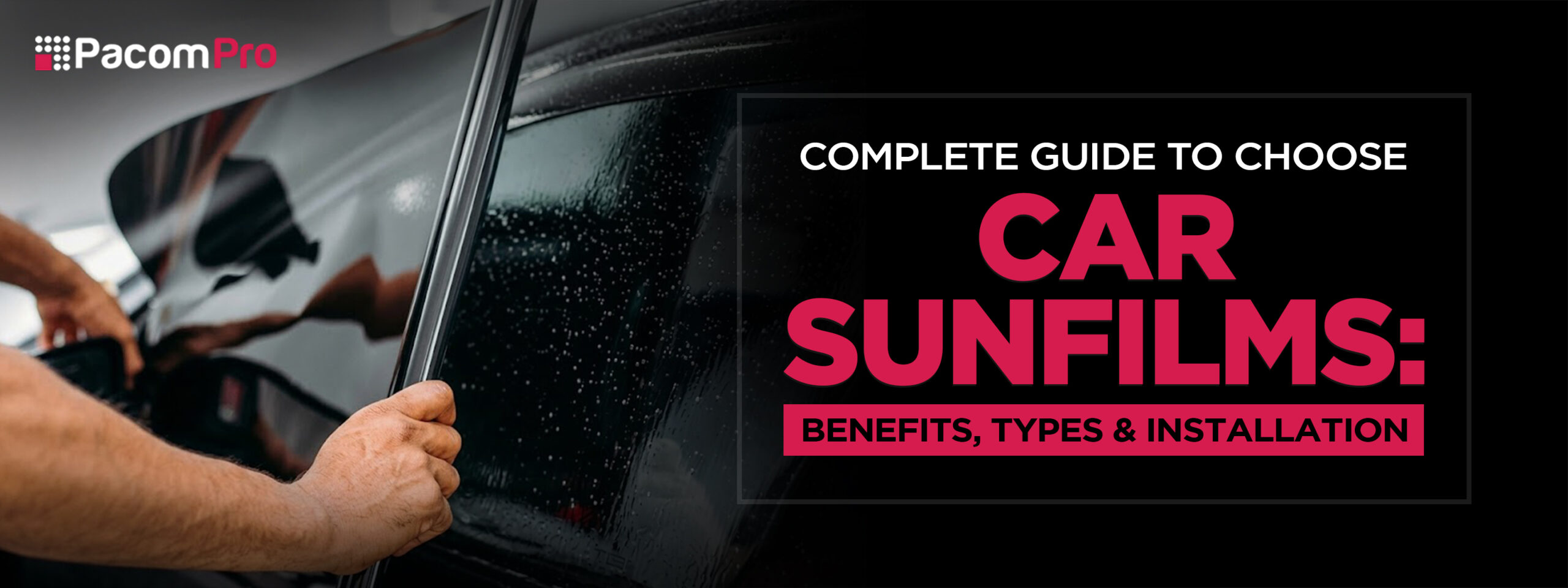
Complete Guide to Choose Car Sunfilms: Benefits, Types & Installation

12/10/2026

Choosing car sun films is not about picking the darkest shade.

The right automotive sunfilm can help control cabin heat, reduce glare, provide UV protection and make driving comfortable. Different films can perform differently even when they look similar.

This guide covers benefits, types, performance factors and things to think about when installing a car sun film.

Why Do Cars Need Sunfilm?

Sunlight entering the car’s glass can increase cabin temperature and expose the interior to solar radiation.

This can affect:

  • Dashboard surfaces
  • Plastic components
  • Cabin comfort
  • seats
  • Door trims
  • Driving visibility during bright sunlight

A properly selected sunfilm can help reduce these effects.

For car owners considering protection beyond sunfilm, Pacom Pro gives  car care and protection services in Coimbatore, including detailing, PPF and coatings.

Benefits of Car Sunfilm

Benefit

What it helps with

Heat rejection

Helps reduce heat entering the cabin

UV protection

Helps reduce UV rays

Glare reduction

Improves comfort during sunlight

Privacy

Reduces visibility into the cabin

Interior protection

Helps reduce solar exposure

Driving Comfort

Makes the cabin comfortable

The important point is darkness alone does not determine performance.

A lighter shade performance film can provide better heat rejection than a darker film.

What Are Different Types of Car Sunfilm?

Different sunfilms use different technologies.

Common categories are:

1. Dyed Sunfilm

Dyed films use dye in the film making to create the needed shade.

Characteristics are:

  • Budget-friendly
  • Multiple shades
  • Privacy and appearance benefits
  • Performance depending on specific product

They can be used when appearance and basic window film requirements are the priority.

2. Metalized Window Film

Metalized films have microscopic metallic particles.

They can provide:

  • Heat rejection
  • Glare reduction
  • Reflective appearance

Some metalized films can interfere with electronic signals such as GPS or other wireless functions.

This is why film’s making should be considered before installation.

3. Carbon Sunfilm

Carbon films use carbon-based particles in the film making.

They are mostly selected for:

  • Darker appearance
  • Heat management
  • Privacy
  • A more refined finish

Performance differs between manufacturers and product specifications.

4. Ceramic Sunfilm

Ceramic films use ceramic particles in the film making..

Ceramic films can offer:

  • High heat rejection
  • UV protection
  • Glare reduction
  • Optical clarity
  • Reduced signal interference compared with some metalized films

Two ceramic films can have different specifications and different real-world performance.

Car Sunfilm Darkness vs Performance

A common mistake in choosing a film simply because it looks dark.

A darker film does not mean better heat rejection.

When comparing car sunfilms, look at:

  • VLT
  • IR rejection
  • TSER
  • UV rejection
  • Optical clarity
  • Film construction
  • Warranty
  • Installation quality

This is also why picking a sunfilm because of shade can end up wrong.

If you are comparing different films before buying, our guide on what to check when buying car sunfilm helps you in your decision.

What Is VLT?

VLT stands for Visible Light Transmission.

It says how much visible light passes through the film.

In simple terms:

  • Higher VLT = lighter-looking film
  • Lower VLT = darker-looking film

VLT helps show the appearance and light transmission of the  sunfilm.

It should not be treated as a direct measurement of heat rejection as well.

What Is IR Rejection?

Infrared radiation is related to the heat from the sun.

A sunfilm that blocks a lot of infrared can help keep the heat from getting through the glass.

You should not look at infrared blocking, by itself. When you are checking sunfilms make sure to look at the full details of how each film performs.

What Is TSER?

TSER stands for Total Solar Energy Rejection.

It shows overall solar energy rejected by the sunfilm.

For buyers comparing sunfilms, TSER can provide a wider indication of solar-energy performance than just looking at how dark a film appears.

Why Do Two Sunfilms With the Same Shade Perform Differently?

Two films having similar appearance but use different technologies and makings.

Performance can differ because of:

  • Film composition
  • Number of layers
  • IR rejection capability
  • Manufacturing quality
  • Glass type
  • Solar energy rejection
  • Optical properties
  • Installation quality

This is important when comparing premium and budget films.

How to Choose Car Sunfilm?

The right film depends on the vehicle, driving conditions, comfort and budget.

Step 1: Identify Your Main Requirement

Ask what is your priority in film.

Is your priority:

  • Heat reduction?
  • UV protection?
  • Privacy?
  • Glare reduction?
  • Appearance?
  • A combination of these?

Step 2: Compare Performance Specifications

Do not compare films by shades alone.

Check:

  • VLT
  • IR rejection
  • TSER
  • UV rejection
  • Optical clarity
  • Warranty
  • Film technology

Step 3: Consider How You Use Your Car

Requirements can change depending on driving habits.

For daily city driving:

  • Heat management
  • Glare reduction
  • UV protection
  • Comfortable visibility

For long-distance driving:

  • Heat rejection
  • Glare reduction
  • Optical clarity
  • Driving comfort

For cars parked outdoors:

  • Heat protection
  • UV protection
  • Interior protection

For luxury vehicles:

  • Optical clarity
  • Premium appearance
  • High-performance protection

Step 4: Consider the Vehicle’s Glass Area

SUVs often have larger glass areas.

The film should be selected according to the vehicle’s glass area and usage.

Why Professional Sunfilm Installation Matters

Even a high-quality sunfilm can look poor when installed incorrectly.

Professional installation helps in:

  • Cleaner edges
  • Better alignment
  • Fewer visible bubbles
  • Better optical clarity
  • Consistent appearance
  • Proper film adhesion

Dust contamination, poor glass preparation and incorrect application techniques can affect the result.

What Happens During Sunfilm Installation?

A professional installation involves:

  1. Glass inspection
  2. Proper glass cleaning
  3. Precise film application
  4. Squeegee application
  5. Edge finishing
  6. Final inspection

The objective is to achieve a clean and properly finished installation.

Pacom’s Car Care Sunfilm Studio in Coimbatore

Pacom’s Car Care is India’s first dedicated Sunfilm Studio, offering a wide variety of automotive sunfilms.

The studio brings multiple film choices all in one place, where customers can compare different films based on their needs.

Customers can explore different:

  • Technologies
  • Shades
  • Performance levels
  • Heat-rejection options
  • Privacy levels
  • Price points

The motive is to help customers select films based on their actual needs.

For car owners searching for sunfilms in Coimbatore having multiple options available at one studio makes the buying process easier.

Car Sunfilm vs Car Window Film: Is There a Difference?

In automotive “sunfilm”, “car window film” and “automotive window film” are often used to describe the same product.

The differences are in:

  • Technology
  • Construction
  • Performance
  • Specification
  • Quality
  • Installation

Therefore, focus on actual film rather than the terminology used.

Common Mistakes When Buying Car Sunfilm

Common mistakes to avoid :

  • Choosing only by darkness
  • Comparing only by price
  • Assuming all ceramic film performs the same
  • Ignoring VLT
  • Looking at IR rejection alone
  • Ignoring TSER
  • Ignoring UV protection
  • Choosing without checking warranty
  • Selecting without considering visibility
  • Focusing on film quality but ignoring installation quality
  • Assuming higher price means better performance

What to Check Before Installation?

Before the installation, ask:

  • What film technology is being used?
  • What is its VLT?
  • What are its heat-rejection specifications?
  • What is its UV rejection?
  • What warranty is provided?
  • What shade options are available?
  • Is the film suitable for my vehicle?
  • How will the film be installed?

Final Thoughts

Choosing car sunfilms should not be something decided by how dark the car sunfilm’s by how much it costs.

A better way is to look at factors when comparing different films:

  • Film technology
  • Visible Light Transmission (VLT)
  • Heat-rejection performance
  • UV protection
  • Total Solar Energy Rejection (TSER)
  • Optical clarity
  • Warranty
  • Installation quality

The right car sunfilm should fit the vehicle, match driving conditions and suit comfort needs and budget.

Pacom’s Car Care offers a range of sunfilm options at its Sunfilm Studio, in Coimbatore. This helps customers choose wisely based on what they need.

The best sunfilm is not always the darkest or the most expensive.

It’s the one that gives the balance of performance, comfort, visibility and value for your car.

Frequently Asked Questions

  1. Does darker sunfilm reject heat?

Not necessarily. Darkness and heat rejection are characteristics. A darker film is not automatically a performing film.

  1. What is the best car sunfilm?

There is no film that is best for every vehicle. The right choice depends on VLT, heat rejection, UV protection, optical clarity, privacy, budget and vehicle usage.

  1. What is VLT in car sunfilm?

VLT means Light Transmission. It indicates how much visible light passes through the film. Higher VLT generally means a looking film.

  1. Does car sunfilm protect the interior?

A suitable film can help reduce UV exposure and solar energy entering through the glass, which can help reduce prolonged sunlight exposure to surfaces.

  1. Where can I choose car sunfilms in Coimbatore?

Pacoms Car Care Sunfilm Studio, in Coimbatore offers a wide range of automotive window film options allowing customers to compare different technologies, shades, performance levels and price points.

car care for every season

The Ultimate Car Care Calendar for Every Season

10/08/2026

Your car experiences every season just as you do. It stands under the blazing summer sun while you’re at work. It battles muddy monsoon roads during your commute. It collects dust during dry months and faces moisture, pollution, bird droppings, and harsh UV rays throughout the year.

Yet, many car owners only think about maintenance when something goes wrong. The truth is, every season affects your vehicle differently, and understanding these changes can significantly extend your car’s lifespan, preserve its appearance, and maintain its resale value.

Here’s your ultimate seasonal car care calendar to keep your vehicle looking and performing its best- 365 days a year.

Summer (March – June)

Summer is one of the toughest seasons for your vehicle. Continuous exposure to high temperatures can fade paint, dry out rubber trims, damage leather interiors, and make your cabin unbearably hot.

Summer Care Checklist
  • ✓ Wash your vehicle weekly to remove dust and contaminants.
  • ✓ Apply Ceramic Coating or maintain existing coatings for enhanced UV protection.
  • ✓ Use premium sun films to reduce cabin heat and block harmful UV rays.
  • ✓ Clean and condition leather seats to prevent cracking.
  • ✓ Park in shaded areas whenever possible.
  • ✓ Check tyre pressure regularly, as heat increases air pressure.
  • ✓ Keep your windshield clean for better visibility.

Pro Tip: Never wash your car under direct sunlight. Water evaporates quickly, leaving behind stubborn mineral deposits and water spots.

Monsoon (July – September)

Rain may cool the weather, but it’s one of the harshest seasons for your car. Mud, dirty rainwater, road grime, and standing water can accelerate corrosion while reducing your vehicle’s shine.

Monsoon Care Checklist
  • ✓ Wash your car after long drives in the rain.
  • ✓ Clean the underbody to remove mud and salt deposits.
  • ✓ Dry door edges, mirrors, and rubber seals thoroughly.
  • ✓ Keep windshield wipers in excellent condition.
  • ✓ Apply hydrophobic treatments to improve visibility during rain.
  • ✓ Inspect tyres for proper grip and tread depth.
  • ✓ Clean floor mats regularly to prevent mould and unpleasant odours.

Pro Tip: Never allow bird droppings or muddy water to remain on the paint for extended periods. Clean them as soon as possible.

Post-Monsoon (October – November)

After months of exposure to rain and contaminants, this is the perfect time to give your vehicle a complete refresh.

Post-Monsoon Care Checklist
  • ✓ Schedule a professional detailing session.
  • ✓ Remove stubborn water spots and surface contaminants.
  • ✓ Inspect paint for swirl marks or minor scratches.
  • ✓ Polish headlights for improved visibility.
  • ✓ Clean the engine bay professionally.
  • ✓ Refresh your interior with deep cleaning and leather conditioning.

Pro Tip: This is one of the best times to apply Ceramic Coating if your vehicle doesn’t already have one.

Winter (December – February)

Although Indian winters are relatively mild, morning dew, fog, pollution, and dust continue to affect your vehicle.

Winter Care Checklist
  • ✓ Wash every two weeks.
  • ✓ Protect paint with ceramic coating or quality sealants.
  • ✓ Keep glass surfaces clean for better visibility.
  • ✓ Vacuum interiors regularly.
  • ✓ Condition leather and vinyl surfaces.
  • ✓ Inspect battery health before long trips.
  • ✓ Maintain tyre pressure during temperature fluctuations.

Pro Tip: Morning dew may look harmless, but combined with pollution, it can leave deposits that dull your paint over time.

Car Care Habits That Matter All Year

Regardless of the season, a few simple habits make a remarkable difference.

  • Wash Correctly – Always use pH-neutral car shampoo and microfiber wash mitts instead of household detergents.
  • Avoid Automatic Brushes – Poor-quality brushes can leave swirl marks and scratches on your paint.
  • Clean Bird Droppings Immediately – Their acidic nature can permanently damage your clear coat if left untreated.
  • Protect Your Interior – Use windshield sunshades whenever parking outdoors and avoid prolonged exposure to direct sunlight.
  • Inspect Your Vehicle Regularly – Small scratches, chips, or stains are much easier and less expensive to fix when addressed early.
Why Professional Detailing Matters

A professional detailing session removes embedded contaminants, restores gloss, corrects paint imperfections, protects surfaces, and extends the life of your vehicle’s finish. Think of it as preventive maintenance not an occasional luxury.

Just as regular servicing keeps your engine healthy, detailing keeps your vehicle looking its best throughout the year.

Your Yearly Car Care Planner
Every Week
  • Wash the exterior
  • Clean glass surfaces
  • Check tyre pressure
Every Month
  • Vacuum interiors
  • Inspect paint and wheels
  • Clean door jambs
  • Condition dashboard and trims
Every 6 Months
  • Professional detailing
  • Paint inspection
  • Leather conditioning
  • Glass treatment
Once a Year
  • Paint correction (if required)
  • Ceramic coating maintenance or re-evaluation
  • Interior deep cleaning
  • Complete vehicle health check
The Pacom Pro Promise

At Pacom Pro, we believe every season deserves a different approach to vehicle care. Our experts understand how India’s climate affects your vehicle and provide tailored detailing, ceramic coating, paint protection, leather restoration, and maintenance solutions designed to preserve both beauty and performance.

Because exceptional vehicles deserve exceptional care, every month of the year.

Drive Every Season with Confidence

Whether it’s ceramic coating, premium detailing, paint protection film, leather restoration, or seasonal maintenance, Pacom Pro is here to keep your vehicle protected throughout the year. Let our specialists help your car stay as impressive on day 1,000 as it was on day one.

Scroll to Top