
Buying a car sunfilm is simple.
Figuring out if you are really using your money in the way possible is the tough part.
You will come across. Hear terms like IR rejection, UV protection, ceramic technology, premium films and high heat rejection.. What do these mean for your car?
The darker the film the more costly it usually is. Usually the price does not have any connection to the real quality of the film.
Begin with what you need and learn about the specifications to compare the full package and make a smart choice.
Start With Your Car, Not the Film
Before asking which is the best car sunfilm, ask questions:
“What do I want the film to do?”
Requirements may differ depending on how you use your car.
For example:
- Car parked outdoors → heat and UV protection matters more
- Daily city driving → comfort, glare reduction and privacy matters more
- Long-distance driving → heat rejection and optical clarity is important
- Luxury car → appearance, clarity and premium finish are higher priorities
There is no single film that is perfect for all cars.
The right film is the one that matches the requirements.
1. Ask for the Exact Film Specification
Don’t stop at:
“Is this a premium film?”
Ask:
“What exactly is the specification of this film?”
Before buying, ask for:
- VLT
- IR rejection
- TSER
- UV rejection
- Film technology
- Warranty
These specifications give concrete comparison instead of relying on sales claims.
If you want in-depth knowledge on these terms, our complete guide to choosing car sunfilms explains it all.
2. Check the VLT (Visible Light Transmission)- Not Just the Shade
It tells how much visible light passes through the film.
As buyer, important question to ask is:
“What does this VLT do for my driving?”
A dark film can give more privacy, while a lighter film can offer better visibility.
Your choice should consider:
- Daytime visibility
- Night-time visibility
- Privacy
- Your driving conditions
- Vehicle appearance
Don’t choose a film only because it looks impressive.
You should be comfortable looking through it from inside.
3. Don’t Judge the Film by IR Rejection Alone
IR rejection is one of the numbers used to market premium sunfilms.
But that alone should not decide your buying.
If someone tells you:
“This is a 95% IR rejection film.”
Ask:
- How is it measured?
- What wavelength range is it tested on?
- Is the figure from the manufacturer?
- What is the TSER?
- What is the VLT?
- What other specifications does the film have?
A high IR rejection can be useful, but it does not describe complete performance of a film.
Look at its complete specifications.
4. Look at TSER Too
TSER means Total Solar Energy Rejection.
Unlike looking at specific components of solar radiation, TSER gives indications of total solar energy rejected by the film.
When comparing films, look at overall specifications rather than choosing the one with the biggest number in one category.
A practical comparison can have:
|
Specification |
What it helps you understand |
|
VLT |
Visible light transmission and shade |
|
IR rejection |
Infrared rejection performance |
|
TSER |
Overall solar-energy rejection |
|
UV rejection |
UV protection |
|
Optical clarity |
Visibility through the glass |
The numbers should be considered together.
5. Ask About UV Protection
UV protection is another factor, especially when your vehicle spends hours under the sun.
UV exposure can damage interior materials over time.
A suitable UV protection sunfilm can help cut UV rays through the glass.
This can be useful in protecting surfaces such as:
- Leather
- Dashboard materials
- Door trims
- Other interior surfaces
If the car is mostly parked under the sun, don’t ignore these specifications.
6. Know Which Technology You’re Actually Buying
Not every window film is made the same way.
You might see:
- Dyed films
- Metalized films
- Carbon films
- Ceramic films
The main question should not be:
“Is it ceramic?”
The better question should not be:
“What does this particular film offer?”
Two films using the technology can still have different specifications, construction, clarity and performance.
So look at the product rather than just relying on the technology name.
7. Compare the Complete Price, Not Just the Film Price
This is where many buyers get confused.
You may receive two quotations:
Film A – ₹ X
Film B – ₹ Y
The immediate reaction is often:
“Why is one expensive?”
Instead, ask what changes between the two.
|
What to compare |
Question to ask |
|
Film |
Which product is being installed? |
|
Technology |
What type of film is it? |
|
Performance |
What specifications does it have? |
|
Warranty |
How long and what all does it cover? |
|
Installation |
How is the installation carried out? |
|
After-sales |
What support is given? |
|
Price |
What does the complete package cost? |
A cheaper price isn’t better value.
A higher price isn’t better either.
You need to understand what you’re paying for.
8. Check the Warranty Before Paying
Ask about the warranty before buying.
Know about:
- How long is the warranty?
- What exactly is covered?
- Is bubbling covered?
- Is peeling covered?
- Is discoloration covered?
- Who handles the warranty?
- Do you receive warranty documentation?
A clear warranty gives you a better understanding of what the manufacturer or installer stands behind.
9. Look at Installation Quality
The film isn’t the only thing you’re buying.
You’re also buying the installation.
Even a good-quality film can look poor when installed badly.
Before installation, look for:
- Clean glass preparation
- Clean installation environment
- Proper film cutting
- Accurate alignment
- Clean edges
- Proper finishing
After installation, inspect for:
- Visible bubbles
- Dust particles
- Haze
- Uneven edges
- Peeling
- Contamination beneath the film
10. Don’t Automatically Choose the Darkest Film
This deserves its own warning because it is one of the most common buying mistakes.
Darkness does not automatically mean heat rejection.
A film can look dark and still not be the best-performing option for your requirements.
Similarly, a lighter film can offer strong solar-energy rejection depending on its technology and specifications.
If you want to understand why films with a similar appearance can perform differently, see our upcoming guide on why two sunfilms with the same shade can perform differently.
11. Think About Visibility Before Choosing the Shade
Ask yourself:
- Can I see clearly at night?
- Can I see properly in the rain?
- Can I clearly see through the side windows?
- Does the film create noticeable haze or distortion?
Privacy is useful.
But it should not come at the expense of comfortable and safe visibility.
The right shade balances between appearance, privacy and practical visibility.
12. Don’t Choose Only by Brand Name
A recognised brand can give confidence, but brand name alone shouldn’t make the decision.
Same brand may have multiple film ranges with different specifications.
So ask for the exact product rather than comparing only brand names.
A Simple Checklist Before You Buy
Before buying for your car sunfilm, ask these questions:
About the film
- What is the exact film?
- What technology does it use?
- What is the VLT?
- What is the IR rejection?
- What is the TSER?
- What is the UV rejection?
About the installation
- Is the glass properly prepared?
- How is the film cut?
- How are the edges finished?
- What quality checks are done after installation?
About the warranty
- How long is the warranty?
- What does it cover?
- Is the warranty provided?
About the price
- Does the quotation include installation?
- Is it for the complete vehicle?
- What changes between different price options?
- Am I paying more for measurable performance or simply for the brand?
If the seller can answer these questions clearly, you have a better basis for making your decision.
How Pacom’s Car Care Helps You Choose
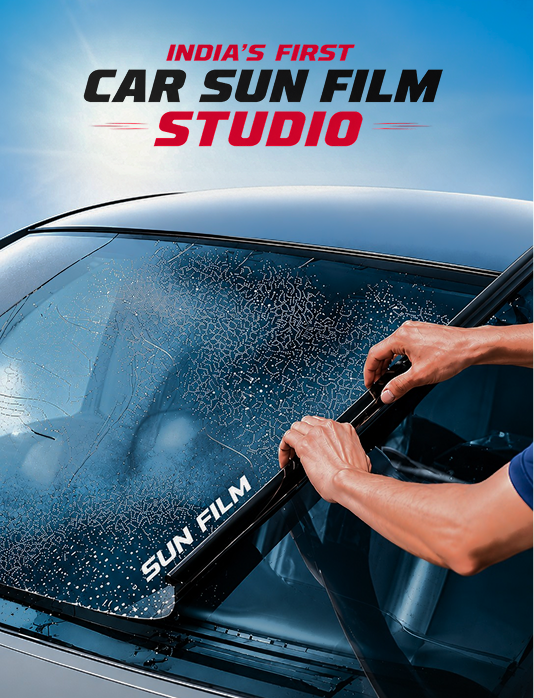
At Pacom’s Car Care Sunfilm Studio in Coimbatore, customers can explore a wide variety of automotive sunfilm options in one dedicated space.
Pacom’s Car Care is India’s first dedicated Sunfilm Studio, bringing different film options, shades and performance levels together for customers to compare.
The approach is simple:
Understand the requirement.
Compare the options.
Choose what fits the car.
Customers can consider factors such as:
- Shade
- Heat-rejection requirements
- Privacy
- Vehicle type
- Driving conditions
- Budget
- Film specifications
The objective isn’t to say that one film is the right answer for everyone.
It is to help car owners make a more informed choice.
What Is the Best Car Sunfilm?
There isn’t one universal answer.
The best car sunfilm for you depends on what you expect from it.
If your priority is heat management, look closely at the relevant solar-rejection specifications.
If privacy is important, consider the shade and VLT.
If visibility is a priority, pay attention to optical clarity and the appropriate VLT.
If the car is parked outdoors, UV and solar protection may deserve more attention.
And whatever film you choose, don’t overlook installation quality and warranty.
Final Thoughts
Buying car sunfilm shouldn’t be a choice between the darkest film and the lowest price.
Before buying, understand what you’re getting.
Check the specification.
Compare the performance.
Ask about the warranty.
Look at the installation.
And most importantly, choose according to how you actually use your car.
The right film is not necessarily the most expensive one.
It is the one that gives you the combination of performance, visibility, comfort and value that your car actually needs.
Frequently Asked Questions
What should I check when buying car sunfilm?
I recommend you check sunfilm specifications carefully. Look at sunfilm VLT sunfilm IR rejection, sunfilm TSER, sunfilm UV protection, sunfilm technology, sunfilm optical clarity, sunfilm warranty and sunfilm installation quality. Also consider your driving conditions and budget.
How do I choose car sunfilm?
I start with my requirements instead of just looking at brand or price. I decide what matters most to me then compare sunfilm specifications, sunfilm warranty, sunfilm installation and total sunfilm price.
Is sunfilm better?
Not necessarily. A darker sunfilm gives a level of visible light transmission and privacy but darkness alone does not decide sunfilm heat‑rejection performance.
Is IR rejection enough?
No. IR rejection is one specification. IR rejection should be considered alongside sunfilm TSER, sunfilm VLT, sunfilm UV protection and the overall construction of sunfilm.
Where can I compare car sunfilm options in Coimbatore?
Pacom’s Car Care Sunfilm Studio, in Coimbatore offers a range of automotive window film options allowing customers to compare different shades and performance levels according to their requirements.